 Blogs9 min read
Posted On: April 2026

Posted On: February 2026
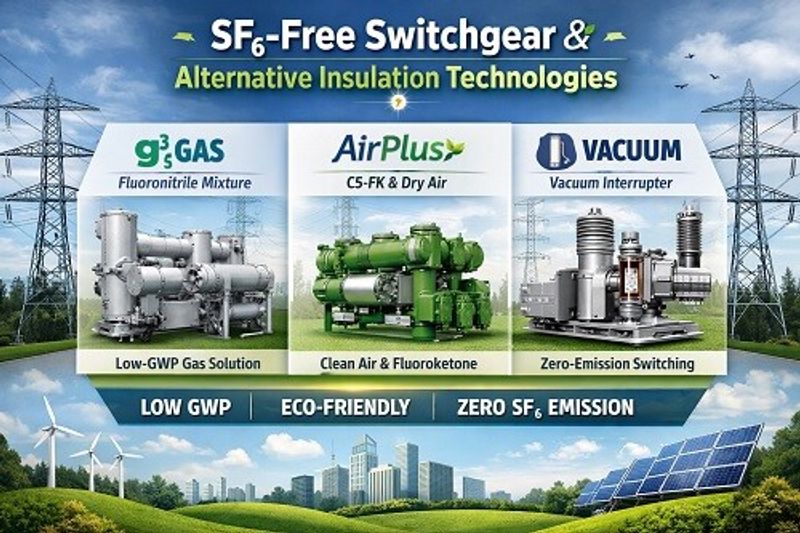
Transitioning Away from SF₆: Practical Pathways for Grid Reliability and Climate Compliance As global power systems expand, the transition away from SF₆ is no longer a theoretical exercise but a technical and financial decision point. Utilities, developers and investors must balance environmental co
As global power systems expand, the transition away from SF₆ is no longer a theoretical exercise but a technical and financial decision point. Utilities, developers and investors must balance environmental compliance with long-term grid reliability. Understanding where alternative insulation technologies are viable – and where risks remain – is essential for informed project planning. This transition requires engineering rigour, lifecycle assessment and lender-aligned decision-making.
SF₆ and the Need for Transition
SF₆ has historically been the standard insulation and interruption medium in high-voltage switchgear due to its excellent dielectric strength and arc-quenching capability. However, SF₆ is also among the most potent greenhouse gases known, with a Global Warming Potential approximately 24,300 times that of CO₂ and an atmospheric lifetime exceeding three millennia. This environmental impact has placed SF₆ firmly under regulatory and investor scrutiny, accelerating the industry-wide shift toward lower-GWP alternatives.
Emerging Alternatives to SF₆-Based Switchgear
The transition for SF₆ free technologies is not driven by a single replacement technology. Instead, multiple insulation and interruption solutions are being adopted depending on voltage class, system configuration, and operational context. Replacing SF6 with alternative insulation technologies like Green Gas for Grid, Vacuum, etc. are found to be emerging practices. Each option presents distinct design, performance, and lifecycle considerations that must be evaluated early in project development.
Key SF₆-Free Switchgear Technologies:
Key Implementation Challenges
Despite strong momentum, large-scale replacement of SF₆-based assets remains constrained by technical, economic, and operational realities. Some of them include-
Grid Integration and Retrofit Constraints
Integrating SF₆-free technologies into existing substations presents additional complexity. Extending or retrofitting Gas Insulated Substations using alternative gases can introduce dielectric coordination challenges at interface points between legacy and new equipment Furthermore, supply-chain limitations—particularly for vacuum interrupters and clean air modules continue to constrain deployment timelines in several markets. These factors reinforce the need for phased transition strategies rather than immediate full-scale replacement.
A Managed Transition, not a Disruption
The shift away from SF₆ is technically achievable and environmentally necessary, but it must be executed through informed, project-specific decision-making rather than blanket technology substitution. For developers, IPPs, investors, and lenders, success lies in integrating alternative technologies where they are technically and economically viable, while managing risk across asset life cycles and grid interfaces.
Plan Your SF₆ Transition with Confidence.
Connect with SgurrEnergy to evaluate viable alternatives, assess lifecycle risks, and build a grid-compliant transition roadmap tailored to your project.
Authored by
Ashwini Patil
Blogs9 min readPosted On: April 2026
 Blogs9 min read
Posted On: February 2026
Grid Stability in the Age of Renewables: Engineering Reliability in a Changing Power System Introduction: Grid Stability & the Role of Power System Studies Services Power systems worldwide are moving from a few large synchronous generators to millions of inverter-based resources—solar PV, wind, batt
 Blogs7 min read
Posted On: February 2026
AI as the Performance Layer in Modern Renewable Energy Projects Over the past five years, AI in Renewable Energy has moved from being an experimental add-on to becoming a critical performance layer across solar, wind, and energy storage assets. Today, AI is making renewable energy smarter by transfo